
Betty casino Plinko game
Introduction
I look at Plinko differently from the way it is often presented on casino pages. On the surface, Betty casino Plinko is one of the simplest real-money top Betty Casino games you can open in an online lobby: you set a stake, choose a risk level, drop a ball, and watch it bounce through a field of pegs until it lands in a payout slot. That sounds almost too basic to deserve a long analysis. In practice, though, Plinko is one of those formats where a minimal interface hides a very specific gambling logic.
That is exactly why the game keeps attracting attention. It is easy to understand in seconds, but the actual session experience can vary sharply depending on settings, bankroll discipline, and expectations. A low-risk setup can feel smooth and repetitive. A high-risk setup can produce long dry stretches broken by occasional large multipliers. The same screen, the same ball drop, two completely different emotional and financial outcomes.
For players in Canada who are considering Betty casino Plinko, the key question is not simply whether the game looks entertaining. The real question is what this format is actually offering: how it behaves over time, where the tension comes from, what the odds mean in practical terms, and whether its pace fits your style. I will break that down in a direct way, without turning this into a generic casino overview.
What Betty casino Plinko is and why players notice it so quickly
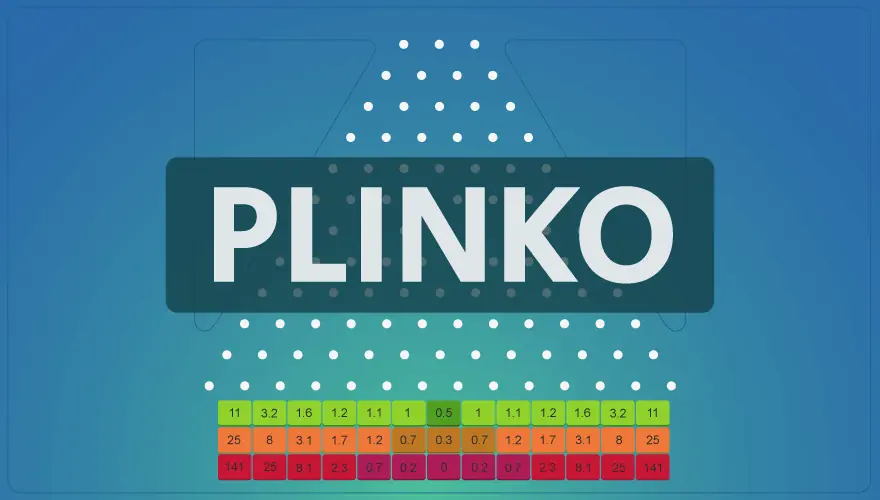
Plinko is a ball-drop gambling game built around a vertical board filled with pins. Each round begins when the player selects a bet amount and drops a ball from the top. As the ball hits peg after peg, it changes direction randomly and eventually lands in one of several slots at the bottom. Each slot corresponds to a multiplier, which determines the return for that round.
The reason this format stands out is simple: it translates chance into movement. In a slot, the random outcome is hidden inside a spin result. In Plinko, randomness becomes visible. You can literally watch the path unfold. That visual transparency creates a strong illusion of readability, even though the outcome is still governed by probability rather than player control. The full picture of payment methods lives in Betty Casino Sweet Bonanza slot details for players comparing casino options, including the less common ones.
I think this is one of the most important observations about Plinko: the game feels more “physical” than many digital casino products, but that does not make it more predictable. The ball looks as if it is reacting to the board in a tangible way, and that visual journey makes every result easier to follow. Yet from the player’s point of view, the core remains the same: you are buying exposure to a distribution of possible outcomes.
Another reason players notice Plinko quickly is session speed. There are no paylines to study, no bonus rounds to wait for, and no elaborate symbol system to decode. One decision leads almost immediately to one outcome. That direct loop makes the game highly accessible, especially for players who want instant feedback rather than layered slot mechanics.
How the Plinko system works behind its simple layout
At Betty casino, Plinko usually revolves around a few core settings: stake size, number of rows, and risk level. The exact interface can vary by provider, but the logic remains consistent. You choose how much to wager, select the board configuration, and decide how aggressive or conservative you want the payout structure to be. Then the ball is released.
The route of the ball is shaped by repeated left-right deflections as it contacts the pegs. Over many rounds, outcomes tend to cluster more often around central slots than the extreme edges. That matters because the largest multipliers are typically placed at the far ends of the board, while the middle positions often carry smaller returns. In other words, the most dramatic rewards sit where the ball is least likely to end up.
This is where many first-time players misunderstand the game. They see a board with visible high multipliers and assume those values are realistic targets in ordinary play. In reality, those top-end numbers are part of the headline appeal, not the typical session pattern. Most rounds will resolve into much more modest results, and many will return less than the original stake or nothing at all, depending on the paytable structure.
The number of rows also changes the feel of the game. A shorter board gives the ball fewer decisions on the way down, which can make rounds resolve faster and produce a tighter outcome spread. A deeper board adds more deflections and usually broadens the distribution. That does not mean a deeper board is automatically “better”; it means the session can feel more dramatic because the path is longer and the payout map often becomes more polarized.
| Setting | What it changes | What it means in practice |
|---|---|---|
| Stake size | The amount risked per drop | Directly affects bankroll durability and emotional pressure |
| Risk level | The payout distribution across bottom slots | Higher settings usually mean rarer large multipliers and rougher short-term swings |
| Rows | The length and spread of the ball’s journey | Can change both pacing and how wide the result range feels |
| Auto-play options | How quickly rounds repeat | Can accelerate losses or gains before the player properly reacts |
Why the game feels engaging and how its pace affects real sessions
Plinko holds attention because it combines anticipation with brevity. Each round lasts only a moment, but that moment is active. You are not waiting through a long animation for a hidden result. You are tracking a visible descent, hoping the ball drifts toward a stronger multiplier while knowing it can bounce away at the last second.
That last-second swing is one of the defining emotional hooks of the format. A ball can spend most of its path near a promising edge and still fall back toward the center at the end. The reverse can happen too. This creates a very specific type of tension: not the layered suspense of a bonus feature, but a compact burst of uncertainty packed into a few seconds.
There is also a rhythm issue that players should take seriously. Because each round is so quick, Betty casino Plinko can encourage repeated drops with very little pause for reflection. The simplicity of the interface removes friction, which is good for usability but not always good for decision-making. If you combine rapid rounds with high-risk settings, variance can hit the bankroll before the player has properly processed what kind of session they are in.
One detail I find worth remembering is that Plinko often feels calmer than it actually is. The board looks clean, the action is short, and the controls are minimal. But a calm interface can mask a sharp payout profile. That contrast is one of the reasons some players underestimate the intensity of the game.
Understanding risk levels, probabilities, and session volatility
If there is one area where players need clarity before launching Plinko, it is risk calibration. The game’s entire personality changes when you move between low, medium, and high risk. These labels are not cosmetic. They alter how value is distributed across the board. To understand the wagering rules behind each offer, open best Betty Casino Trustpilot ratings page for Canadian players next.
On lower settings, the bottom slots are usually arranged to produce more frequent modest returns. You still face losing rounds, but the session may feel steadier because results cluster around smaller multipliers more often. On higher settings, the board tends to become more top-heavy at the edges. That means the game offers access to larger payouts, but usually at the cost of longer sequences of weak outcomes.
For practical play, this means two things:
If you want extended session time and lower emotional swings, lower risk settings generally make more sense.
If you are chasing standout multipliers, you should expect a bumpier path and accept that many rounds may not come close to those headline numbers.
Probability in Plinko is best understood as a distribution rather than a target. The game is not asking, “Will you hit the maximum multiplier?” The game is asking, “How often are you willing to accept ordinary or weak outcomes in exchange for occasional access to bigger ones?” That is the real trade-off.
I would go further: Plinko is one of the clearest examples of how visible randomness can distort intuition. Because the ball moves in front of you, it is tempting to believe that near-misses carry information. They do not. A ball that almost reached a premium slot is still just a losing or low-return result in practical bankroll terms. The board creates memorable moments, but memory is not the same thing as edge.
What a player should know about rhythm, expected outcomes, and bankroll pressure
Before playing Betty casino Plinko, it helps to think beyond single drops. The game should be judged over a sequence, not by one dramatic bounce. A short session can produce almost any impression: smooth, frustrating, lucky, brutal. None of those snapshots tells the full story on its own.
What matters more is how the game behaves over dozens or hundreds of rounds. Because the action is fast, even moderate stakes can add up quickly. A player making small bets at a high drop frequency can still burn through a budget faster than expected. That is especially true when auto-play is active and there is no natural pause between rounds.
I usually suggest watching for three practical pressure points:
Stake-to-bankroll ratio. If each drop is too large relative to your session budget, variance will feel harsher and decision quality often drops.
Risk setting mismatch. Many players choose an aggressive configuration for excitement, then become uncomfortable when the actual downturn arrives.
False comfort from quick rounds. Fast feedback can make losses feel smaller in the moment, even when the cumulative total says otherwise.
Expected outcomes in Plinko are also easy to misread because the game shows multipliers so openly. Seeing a 100x or 1000x number on the board is not the same as having a realistic chance of hitting it in a short session. Big multipliers are part of the mathematical architecture, but they should be treated as rare events rather than routine goals.
A useful mental frame is this: Plinko is less about building toward a feature and more about repeatedly sampling a payout curve. Once you see it that way, the logic of the game becomes much clearer.
How Plinko differs from classic slots and other common casino games
Plinko sits in an unusual position among online casino games. It shares the accessibility of slots, the immediacy of crash-style products, and the visible randomness of arcade-inspired formats, yet it is not fully identical to any of them.
Compared with classic slots, the biggest difference is structural. A slot wraps probability inside symbols, reels, paylines, and bonus layers. Plinko strips all of that away. There are no wilds, no free spins, no expanding features, and no narrative build. The outcome is compressed into a single drop. This makes the game easier to read, but it also means there is less variety in the moment-to-moment interaction.
Compared with roulette, Plinko is visually more kinetic. Roulette gives you a discrete result on a wheel; Plinko gives you a path. Compared with blackjack, it removes decision depth almost entirely. Compared with crash games checklist, it offers less timing skill and more passive observation. That can be a strength or a weakness depending on what a player wants.
Here is a practical comparison:
| Format | Main source of engagement | Player control level | Session feel |
|---|---|---|---|
| Plinko | Visible path and payout distribution | Low | Fast, tense, repetitive by design |
| Classic slots | Reels, symbols, features, bonus rounds | Low | More varied presentation, less transparent math |
| Roulette | Bet selection and wheel result | Medium | Structured and familiar, less animated |
| Blackjack | Decision-making and hand management | High | Slower, more tactical |
The key takeaway is that Plinko is not a substitute for every other casino format. It is a narrow but distinctive experience. If you enjoy visual probability and compact suspense, it can be a good fit. If you want strategic input or evolving bonus sequences, it may feel too bare.
Where the game performs well and where its limits become obvious
Betty casino Plinko has several clear strengths. First, it is immediately understandable. A new player does not need a tutorial to grasp the basic loop. Second, the game is transparent in presentation. You can see the board, the multipliers, and the result path in real time. Third, it is flexible in mood. By adjusting rows and risk level, players can shape the session toward steadier returns or more aggressive swings.
But those strengths come with trade-offs. Simplicity reduces confusion, yet it also reduces depth. Once you understand the board, there is not much else to discover. Unlike a strong slot with layered bonus design, Plinko does not unfold over time. Its appeal depends heavily on whether the core drop cycle remains interesting to you.
Another limitation is that the visual journey can create stronger emotional reactions than the financial value of the result justifies. A near-miss on a high multiplier can feel dramatic, but from a practical standpoint it may still be just another low-return round. This gap between what the eye experiences and what the bankroll records is one of the most overlooked aspects of the format.
I also think Plinko exposes player temperament very quickly. Some people like the honesty of it: short round, clear outcome, no extra noise. Others discover after ten minutes that they miss the texture of reels, bonus triggers, or strategic choices. In that sense, Plinko is efficient not only as a game but also as a test of preference.
Who may enjoy Betty casino Plinko and who may prefer another format
Plinko can suit players who value quick rounds, visible randomness, and a straightforward betting loop. It often works well for people who do not want to study complex paytables or wait for feature activation. If you like games where the result is immediate and the tension is concentrated into a few seconds, this format makes sense.
It may also appeal to players who enjoy adjusting session character through settings. The ability to switch between lower and higher risk gives Plinko a degree of customization that some simple casino products lack. That does not turn it into a deep strategic experience, but it does let the player choose the kind of volatility they are willing to face.
On the other hand, Plinko may not suit players who need variety, narrative progression, or meaningful decision-making. If your ideal session involves bonus rounds, symbol combinations, table strategy, or strong thematic presentation, this game can feel too narrow. It can also disappoint players who focus too heavily on maximum multipliers without accepting how rarely those outcomes may occur.
In plain terms, Plinko is often best for players who appreciate clean design and understand variance. It is less suitable for players who confuse visible movement with influence or who expect the board’s most extreme numbers to appear with any regularity.
What to check before starting a Plinko session
Before you launch Betty casino Plinko, I recommend a short practical checklist. This is where a lot of avoidable mistakes can be prevented.
Check the risk level first. Do not treat it as a decorative setting. It defines the session profile.
Look at the multiplier spread. Understand where the common outcomes sit and how far the premium values are from the center.
Set a drop budget, not just a money budget. Because rounds are so fast, it helps to decide how many drops you are comfortable making.
Use demo mode if available. This is one of the easiest ways to feel the rhythm before committing real funds.
Be careful with auto-play. It can turn a controlled session into an automatic spend cycle very quickly.
The most practical point of all is expectation management. If you approach Plinko as a clean, fast, variance-driven game with visible probability in motion, you are likely to assess it fairly. If you approach it expecting regular big hits because the board displays large multipliers, disappointment is much more likely.
Final verdict on Betty casino Plinko
Betty casino Plinko offers a very specific kind of online gambling experience: fast rounds, transparent presentation, adjustable volatility, and tension concentrated into the visible fall of a single ball. Its biggest strength is clarity. You can understand the structure quickly, see the result develop in front of you, and tailor the session through risk settings and board depth.
Its biggest caution point is also clear. The game’s simple appearance can hide a sharp payout profile, especially on aggressive settings. Large multipliers may dominate attention, but they should not dominate expectations. Plinko is at its best when the player understands that most of the experience is about managing distribution, pace, and bankroll pressure rather than chasing a spectacular edge hit every few rounds.
For some players, that makes the game highly appealing. It is direct, readable, and free of unnecessary clutter. For others, it will feel too repetitive or too exposed to short-term swings. My view is straightforward: Plinko is worth trying if you want a stripped-back casino format where randomness is visible and the rhythm is immediate. Just go in with the right mindset. The board may look simple, but the session outcome depends heavily on how you choose to engage with its risk structure.
FAQ
What does Plinko gameplay involve on the official site?
A ball drops from the top and bounces through pegs before landing in a slot. The result is shown as a multiplier and can be reflected in your Plinko balance for that round.
After pressing the bet or start button, why does the ball not drop in Plinko?
A blocked round is often caused by an unstable connection, browser restrictions, or a session that did not fully load. Refresh the game lobby tab or try switching to a different browser, then open Plinko again.
Where are Plinko settings displayed during a quick launch?
Game settings are usually visible in the game panel near the play area, including bet selection and demo or real-money status. Keeping that panel open helps avoid placing the wrong bet.
How do multipliers work after the ball lands?
The board outcome determines the multiplier associated with the landing zone. The win for the round is calculated using your bet and the multiplier shown for that result.
If a promo code is required on Betty, where should it be entered before playing Plinko?
Promo codes are entered during registration or at the deposit stage in the cashier flow, depending on the offer. The code must be applied before the qualifying action to ensure it is linked to the correct bonus status.
What happens if the Plinko balance looks off after switching tabs or refreshing?
Return to the game lobby and re-open Plinko to sync the current balance and verify the last completed result. A refresh can sometimes show an outdated round state until the game reconnects.
How can players recognize that Plinko is set up for real-money play rather than demo mode?
The game panel will indicate the current mode and the balance source used for wins. Checking the status near the bet controls is the fastest way to confirm whether the round credits your real-money balance.